At Roth Galleries, I trust my CANON gear to capture the vivid colors of the famous New England fall foliage and picturesque scenery. The CANON R5 camera with the pristine 24-105mm lens is always in my bag, it is a great all around combo no matter the subject. Check out the link above if you are in the market to upgrade!

Now, let's get to the meat of this blog post and 15 fall foliage photography tips, hope you explore, enjoy and share!
Photo Tip #1: Plan your New England fall foliage leaf peeping and photography trips well in advance and at peak times or near peak. There are many sites that provide the required information and provide accurate foliage reports for color and leaf drop.
Photo Tip #1: Plan your New England fall foliage leaf peeping and photography trips well in advance and at peak times or near peak. There are many sites that provide the required information and provide accurate foliage reports for color and leaf drop.
Photo Tip #2:
Use a Polarizing Filter to boost color and balance the contrast in your
photography image. The filter eliminates unwanted and distracting glare and
reflections on wet leaves and one can think of it as sunglasses for your
camera. Overall, these filters increase color saturation, boost blue sky, add
cloud contrast, control reflections and add neutral density to lengthen
exposure times for blurred, impressionistic images.
Photo Tip #3:
Utilize lowest possible ISO settings like ISO 100 and below for higher quality
pictures. Do not use your camera Auto ISO setting since at low light conditions
it will adjust to higher ISO settings that may produces more noise. Instead get
in the habit of using your tripod even when sufficient light is available. On
a different note using our tripod will benefit in better and more pleasing compositions
as well.
Photo Tip #4:
Consider the weather forecast. For example get out after a rain storm has
passed to take advantage of beautiful lighting conditions when the sunlight
breaks through and provides us with spectacular lighting conditions on fall
foliage. Air is clearest in the morning and after rain making for good times to
strive for stunning and scenic autumn landscape photography compositions.

Photo Tip #5:
Do not be fooled and discouraged by overcast and rainy day weather forecasts. Cloudy
days make for beautiful balanced light and provide us photographers with
minimal wind and beautiful light to capture sharp details in leaves and trunks.
Rain drops on leaves make for excellent macro photography images and wet leaves
bring out colors even more.
Photo Tip #6: Eliminate overcast sky by using your telephoto lens to achieve tighter, more Intimate Landscape compositions that are more beneficial and interesting.
Photo Tip #6: Eliminate overcast sky by using your telephoto lens to achieve tighter, more Intimate Landscape compositions that are more beneficial and interesting.
Photo Tip #7:
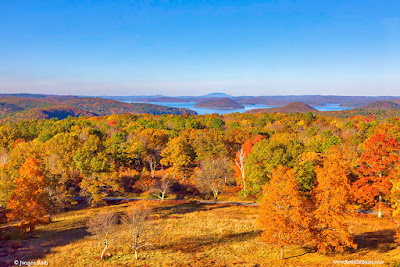
Look for warm autumn hues and combine them with their complementary colors for
high color contrast imagery; For example golden, yellow or orange foliage
combined with a saturated blue sky or red maple leaves works well with an
evergreen background, all making for fabulous autumn images.
Photo Tip #8:
Photograph fall colors on bright sunny days at Mid Range Aperture settings to add additional depth to images
when including a blue sky in the compositions. The sunlight really makes the
colors pop.
Photo Tip #9:
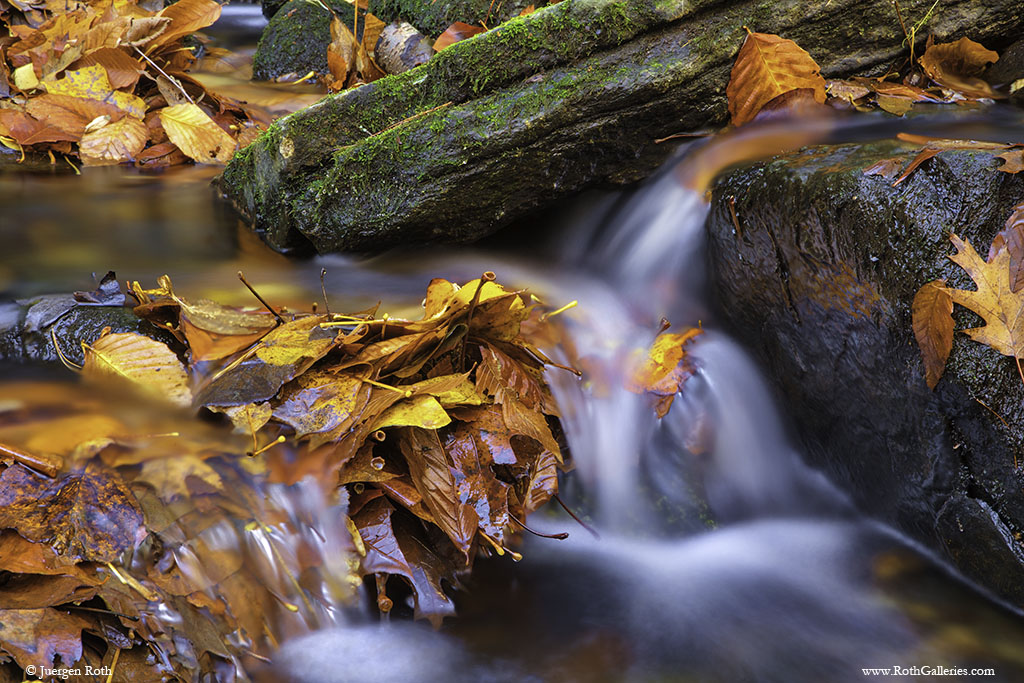
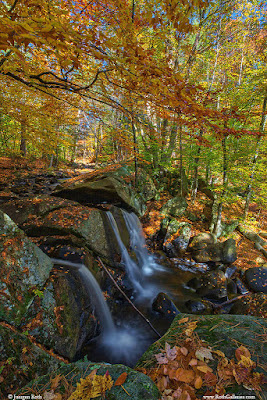
Find inspiration in waterfalls framed by beautiful foliage colors or get close
with still tree leaves on the ground and on rocks in rushing creeks and brooks.
Overcast and cloudy sky provides excellent conditions for such photo objects.

Photo Tip #10:
Photograph during the morning or afternoon sunlight when light is at its best
and leaves are sun-kissed by the beautiful sunlight thereby illuminating the
colors of fall foliage.
Photo Tip #11:
Capture beautiful autumn, razor sharp and Mirror-Like Reflections in ponds and
lakes. Too windy for that ... no problem, create artistic impressionistic
images within the tiny waves or with foliage in motion.
Photo Tip #12: Saturate and intensify colors by underexposing your photos slightly.
Photo Tip #12: Saturate and intensify colors by underexposing your photos slightly.
Photo Tip #14:
Use the camera self timer, a cable release or remote release to trip the
shutter. If not using live view use mirror lock up to minimize camera shake and
blurry pictures.

Photo Tip #15:
Do not ditch November and December when leaves are on the ground and make for
beautiful Macro Photography pictures. Visit your local sites to get in close
and extend fall foliage photography season for a couple of months.
Good light and happy photo making!